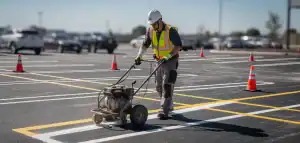

Winter doesn’t show up with a warning label. One day it’s sunny, and then it’s sleet, ice, and wrecked pavement. At OKPLS, we’ve seen how fast winter weather can turn a decent lot into a liability. So, we put together these winter parking lot maintenance tips to help you stay ahead of the unique challenges Oklahoma winters bring, because a well-maintained parking lot now can save you from costly repairs and future damage later.
1. Start With Proactive Parking Lot Maintenance Before Oklahoma Winter Hits
Getting ahead of winter is one of the most important things you can do. If you wait until the cold weather rolls in, you’ll have fewer options and may already be facing costly damage. Before winter sets, walk your entire parking lot and look for signs of wear and tear: minor cracks, faded striping, clogged drains, or small dips in the asphalt surface. These little things don’t seem like much now, but once snow and ice move in, they turn into hazardous conditions quickly.
Proactive lot maintenance also means checking your parking lot lighting, which becomes especially important during shorter days and bad weather conditions. Dim or broken lights can make it harder for pedestrians and drivers to spot icy patches or navigate your lot safely.
2. Ensure Proper Drainage System Before Freezes
Poor drainage is one of the most overlooked threats in winter. If your drainage system isn’t doing its job, standing water will collect and freeze, which will then create hazardous conditions that are dangerous and hard to fix once temperatures drop.
Take time before winter to inspect all catch basins, curbs, and drains. Look for leaves, trash, or debris that could cause a drainage problem during a storm. If you’re seeing puddles in the same spots after rain, that’s a red flag. You may need regrading or new inlets to help prevent standing water and further deterioration of your asphalt pavement.
By ensuring proper drainage, you reduce your risk of water penetration, which can lead to larger cracks, potholes, or even base failure under the surface. Catching this early prevents more damage and keeps your parking lot in better shape throughout the season.
3. Stay Ahead of Ice Management With Smart De-Icing Strategies
A reactive approach to ice management is never enough. Instead of waiting for the lot to turn slick, think ahead. Pre-treating your lot before a storm using liquid deicing agents, like calcium chloride or magnesium chloride, can stop ice from bonding to the surface. This makes snow removal faster and cuts down on how much product you need afterward.
Be selective about what you use. Some deicers are better for extreme cold, while others are more eco-friendly or gentler on asphalt. Know the differences and choose the right mix for your site. And remember: salt and snow blowers alone aren’t a plan. They’re just tools. A real snow and ice management plan includes pre-treatment, post-storm cleanup, and a method for tracking which areas need special attention. You’ll use fewer materials and reduce the risk of slip-and-fall incidents for good.
4. Address Cracks and Potholes Early to Stop Winter Damage From Spreading
Every year, we see small surface issues explode into costly repairs after just a few storms. This is because freeze-thaw cycles take those little imperfections, like minor cracks or dips, and stretch them wide open. Water gets in, freezes, expands, and before long, your parking area is full of trip hazards, damaged sections, or even sinkholes.
The fix is to repair cracks, treat cracks, and potholes early. Schedule crack filling during a dry spell before temperatures drop too low. Not only does this help prevent further damage, but it’s far more cost-effective than letting it sit and patching in the spring. A well-timed crack fill also helps keep the protective layer on your asphalt pavement intact, blocking UV rays, moisture, and debris from doing even more harm over time.
5. Schedule Necessary Repairs Before Small Issues Become Safety Hazards
Spot something that needs fixing? Don’t wait. Even minor issues like uneven curbs, raveling at the edges, or small potholes can get worse in cold weather. They also pose a safety risk, especially once covered by snow. Property managers should schedule necessary repairs before winter storms make access harder. Some fixes can still be done during the winter months, especially if the weather stays dry for a few days. But the earlier you act, the better your odds of avoiding downtime or other damage.
Getting those repairs out of the way early helps your winter maintenance team work more efficiently too. They won’t have to plow around problem spots or apply extra deicer to the same place over and over.
6. Use Regular Maintenance Checks to Catch Winter Wear and Tear Fast
Winter is no time to be hands-off. The best way to stay on top of issues is through regular maintenance. After each storm, do a quick walk-through. Check for new cracks, damaged striping, or sections where standing water or ice is forming again and again. Keep a log of trouble spots. If a corner near a dumpster keeps freezing, that may signal a drainage problem. If you’re always salting the same patch, maybe that area needs better grading or a surface repair.
These checks don’t have to take long, but they give you a chance to spot small issues before they cause further deterioration or costly damage. They also help inform your snow and ice strategy going forward.
7. Protect High-Traffic Areas With Extra Parking Lot Maintenance Attention
Not every part of your parking lot wears evenly. Entrances, crosswalks, drive lanes, and areas around building entrances take a bigger hit in the winter. That’s where snow gets piled up. That’s where salt gets dropped again and again. And that’s where tires, plows, and foot traffic keep grinding down the surface.
These zones need extra care. Apply deicing agents here first, monitor for new cracks and potholes, and prioritize any repairs in these areas when scheduling work. You may also need to restripe or reseal more often to keep markings visible and the surface protected.
8. Prepare Snow and Ice Management Plans Property Managers Can Rely On
Don’t wait until the first snowflake falls to figure out who’s plowing your lot. Good snow and ice management plans are built early. If you’re a property manager, that means working with your contractor now to create a schedule, define priority zones, and agree on where snow should be pushed.
You should also plan around site-specific details:
- Where do people walk?
- Which ADA spots need extra attention?
- Do certain areas get less sunlight and stay icy longer?
Having answers ahead of time means less confusion, faster snow removal, and better safety outcomes. The more detail your plan includes, the more consistent your winter maintenance will be.
9. Monitor Drainage, Surfaces, and Ice Management After Every Winter Storm
Each storm leaves its mark. Melting snow can reveal weakened pavement, drainage failures, or worn-down surface coating. That’s why post-storm checks are just as important as pre-season ones.
Keep an eye on areas where water penetration is more likely. If standing water lingers after every thaw, you may be looking at a base issue or asphalt damage just below the surface. And of course, check for erosion near drains, loss of surface material near curbs, and buildup of deicing agents or debris. Tracking these changes helps you adjust your maintenance plans before more damage piles up.
10. Create a Seasonal Parking Lot Maintenance Checklist for Property Managers
A checklist keeps your whole team organized and makes sure nothing falls through the cracks (literally). For property managers, this is a simple way to stay consistent and on top of winter tasks. Here’s what to include:
- Pre-winter thorough inspection
- Fixing minor cracks and prioritizing repairs
- Cleaning out drains and checking for a working drainage system
- Scheduling snow and ice management
- Keeping track of salt use and deicing agents
- Weekly inspections during and after storms
- Post-winter planning for spring repairs
11. Keep Striping, Signage, and Curbs Visible Through Winter Conditions
In low light or snow-covered conditions, visibility becomes everything. Faded lines or missing signage cause real safety risks, especially when ice is involved. Make sure your parking lot striping is in good shape heading into the winter months. Even better, schedule a seal coating in late fall to add a protective layer and brighten up line visibility.
Check all parking lot lighting, too. Replace burnt-out bulbs and consider upgrades if your lot looks dim after sunset. Clear signage and visible curbs help prevent accidents, especially in icy conditions when every second of reaction time matters.
OKPLS Can Help You Keep Your Parking Lot Safe This Winter

By the time damage shows up in spring, it’s already cost you. Winter season’s ice, salt, and wear can quietly wreck your pavement. Let OKPLS help you tackle the season with smart planning and clear parking lot striping in Oklahoma.
We know how to handle harsh winter conditions and spot hidden risks before they become major problems. Avoid the spike in long term repair costs and keep your lot in great shape, so you’re ready for the warmer months and any various types of property traffic ahead.
Get in touch today!