

Not all parking spaces are created equal. Some are wide, well-marked, and close to the door. Others feel like they were designed by someone who’s never driven a car—or met another human.
There are awesome parking lots out there. Whether it’s a slick rooftop structure, a perfectly striped surface parking lot, or a downtown garage that actually feels walkable, these spaces are more than a backdrop. They’re part of the experience.
Oklahoma City Parking Doesn’t Have to Be Boring

In the heart of Oklahoma City, a good parking lot isn’t just about asphalt and lines—it’s about traffic flow, pedestrian safety, and making the space feel like it belongs in the city it serves.
Think about the lot outside your favorite local coffee shop—tight squeeze, no clear walkways, and you’re left guessing if you parked legally. In older parts of town, some layouts weren’t built for the traffic we see today. In newer developments, things are sometimes so spread out you feel like you need to pack snacks to walk back to the entrance. That’s where smarter planning comes in—and it’s something OK Parking and Line Striping knows firsthand.
When done right, parking adds real value to public spaces, drives foot traffic for businesses, and doesn’t leave you guessing where the exit is.
Why Parking Garages Are Getting a Second Look
Forget dark, echo-filled concrete boxes. Modern parking garages are using natural light, smart layouts, and even solar panel canopies to shift car culture from purely functional to surprisingly thoughtful.
This shift isn’t just about looks. It’s about responding to what drivers actually need—natural light for visibility, clear signage for smoother entry and exit, and better pedestrian routes to avoid dodging bumpers. With rideshare and delivery increasing in many cities, garages now serve more than just parked cars—they’re dynamic, high-use spaces that need to be both safe and legible.
They’re also becoming multi-use spaces—connected to transit hubs, lined with retail, or topped with parks.
What Smart Parking Lot Design Looks Like
Good parking lot design considers far more than just how many cars you can fit. It factors in turning radiuses, aisles, pedestrians, and even the landscape around it.
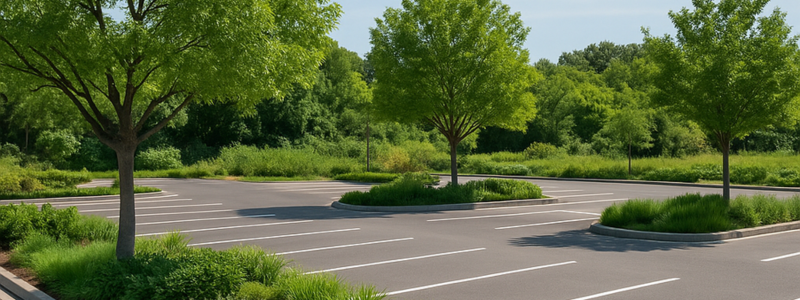
A few key factors:
- Sightlines matter.
- Placement of handicapped spots can’t be an afterthought.
- Don’t waste square footage on awkward curves or dead ends.
These small decisions add up to a layout that’s actually functional—for everyone using it.
Color, Lines, and a Bit of Logic
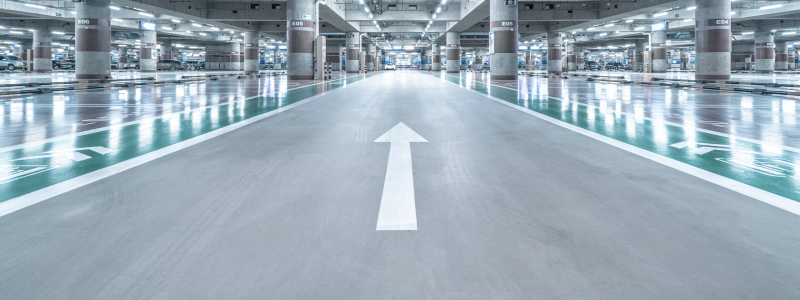
Clean striping, visible directional arrows, and bright yellow curb zones keep things moving. Good parking is as much about communication as it is about capacity.
If people don’t know where to go—or worse, park sideways in the wrong rows—the lot loses its efficiency fast.
Because once the lines start failing, the rest usually follows.
Parking for Real People
Most people don’t think about parking spaces until they’re too small, too far, or too confusing. But the best lots are designed with the end user in mind.
That means:
- Kids aren’t dodging traffic to get to the mall.
- Walkways are actually installed where people want to walk.
- Lighting helps you spot your vehicle at all hours.
It’s all about anticipating needs before someone has to go looking for answers.
Looks Matter—Even in a Lot
A little effort goes a long way. A touch of greenery. Clean site lines. Simple signage. These touches won’t slow down your building timeline, but they might make people think, Hey, this is actually kind of… nice.
Plus, better aesthetics = better value for your property and the surrounding streets.
What Makes a Lot Feel Good?
A good layout does more than organize space—it changes how people feel the second they pull in. Are the lanes wide enough to turn without a 3-point correction? Are the stalls evenly spaced, or is every other car hanging over the line?
A well-laid lot builds trust fast, especially in busy retail zones, schools, and medical facilities. And when it works, it feels seamless—like you just got lucky. But luck has nothing to do with it. That’s thoughtful layout doing its job.
Real Examples From Around the World
Let’s be honest—parking lots in America aren’t usually known for great design. But there are some standout exceptions that prove they can be functional, surprising, and even a little bit inspiring.
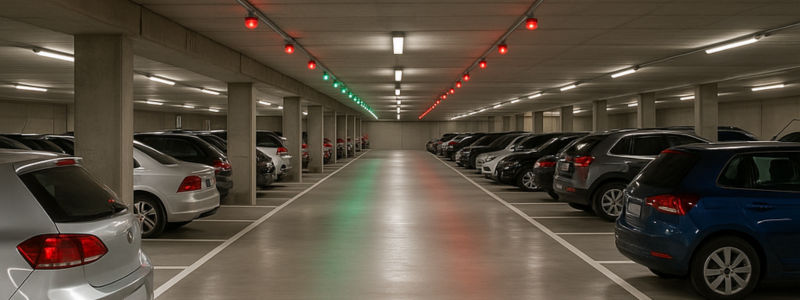
Denmark: Color-Coded and Sensor-Driven
The Dokk1 library lot is a masterclass in space-saving and real-time navigation. Using a sensor system and colored zones, it guides cars directly to available spaces—cutting down on traffic inside the garage and outside on the streets.
It’s a smart answer to a common problem, especially in cities where the minimum number of stalls is hard to meet.
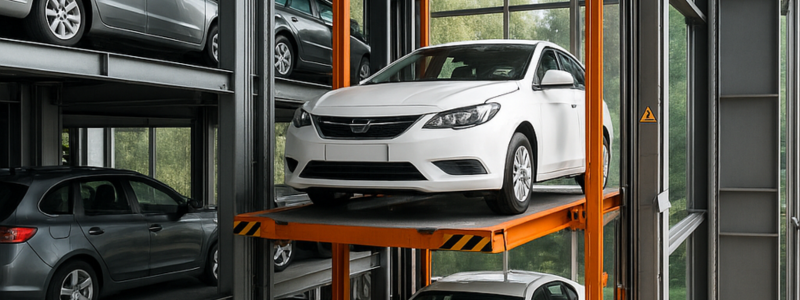
Tokyo: Robotic Parking With a Vertical Twist
In Tokyo, space is tight—but the tech is sharp. Their tower-style lots transform the idea of a surface parking lot, stacking vehicles vertically with robotic lifts that retrieve your car in seconds.
It may seem futuristic, but it solves a very current issue: how to park more in less, without spreading out across limited urban land.
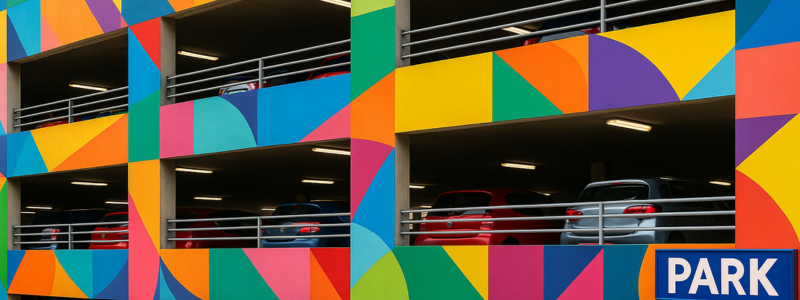
Miami: Street Art Meets Striping
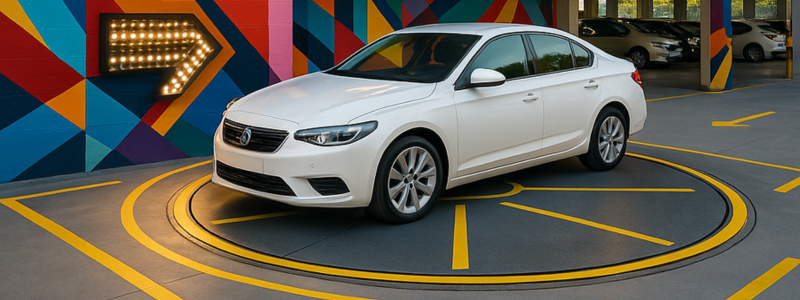
Here, parking meets personality. One downtown parking garage features large-scale murals, LED lighting, and directional art instead of traditional arrows.
It proves that with a little design knowledge and community focus, even a parking structure can feel like a landmark—not just a placeholder.
Germany: Solar From the Top Down
A university rooftop lot in Germany doubles as a renewable energy source. With solar panels spanning nearly every stall, this design adds function without sacrificing form.
It’s a crucial reminder that good parking isn’t just about layout—it’s about how well it supports the rest of the site and the people who use it.
California: A Vineyard Lot With Style
In wine country, even the parking is beautiful. This vineyard uses crushed gravel, shaded trees, and subtle directional signage to blend function with charm.
There’s no overthinking—just thoughtful placement, soft lines, and the ability to move with the flow of the site.
It’s the kind of space that typically gets overlooked, but here it appears to be part of the experience, not separate from it.
Each of these projects solves a different set of challenges—from saving space to integrating design with daily use. They’re smart, specific, and worth taking note of.
You don’t need robotic towers or rooftop solar to build a better lot. You just need to watch how people use your space, determine what really matters, and build with that in mind. The right layout has the course to guide drivers—and the power to shift how they feel from the moment they pull in.
Function Comes First, But Style Can Follow
Whether your lot is located behind a house, beside a downtown office, or wrapped around a big-box store, it still has to work.
That means:
- Counting your capacity right
- Prioritizing safety
- Thinking about placement, lighting, and access from the street
When parking works, people don’t notice—and that’s the point. But when it’s broken? It’s the first thing they complain about. That’s why layout matters more than most people think.
Let the Numbers Guide the Design
Good layout isn’t guesswork. It starts with data—how many stalls are needed, where bottlenecks occur, and how drivers move through the lot.
That’s why we start every project by looking at real use cases. We don’t just meet the minimum number required—we figure out how to make your layout work harder, with fewer friction points and better movement from start to stop.
We also account for local codes, ADA guidelines, and access requirements, working closely with contractors and planners to align with compliance & regulatory services from the very beginning. It’s not just about what fits—it’s about what passes inspection, serves the public, and holds up long term.
Let’s Design a Lot That Actually Works
At OK Parking and Line Striping, we’re not just laying lines—we’re helping businesses create better experiences from the very first turn-in.
We know how to optimize small lots, support high-capacity garages, and design with walkability and efficiency in mind. Whether it’s a fresh layout or a full shift in how your lot serves people, we’ll make it work—without wasting space or patience.
Let’s turn your lot into something functional, better-looking, and yes—maybe even a little bit cool.
And if you’re not sure where to start? Bring a friend. We’ll walk the site, head out a plan, and get it looking nicely done.